As low temperatures settle in, it’s critical to think about the safety and well-being of our dogs. While some pups love the snow, cold weather can pose serious and preventable risks. Protecting pets from extreme weather isn’t just kindness; it’s a responsibility we share as a community.
Here are some tips to keep your pets safe this winter:
Cold exposure: Dogs are susceptible to hypothermia and frostbite, especially short-haired breeds, smaller dogs, seniors, and those not adapted to cold climates. Limit time outdoors and closely monitor your dog when temperatures drop.
Paw safety: Ice and snow can build up between paw pads, causing pain and injury. Road salt and de-icing chemicals can burn paws and are dangerous if ingested. Wipe paws thoroughly after walks.
Wet fur and insulation: Dogs lose body heat rapidly when wet. Dry your dog completely after exposure to snow or rain. In cold, wet conditions, blankets do not insulate and can worsen heat loss—straw is the safest bedding for sheltered outdoor environments.
Health concerns: Cold weather can aggravate arthritis, respiratory issues, and other medical conditions. Older dogs often struggle more to regulate body temperature.
Ice hazards: Frozen ponds and lakes are extremely dangerous. Ice may appear solid but can give way without warning, leading to drowning or hypothermia. Keep dogs away from frozen bodies of water.
Breed and size considerations: Some breeds tolerate cold better than others, but no dog is immune to extreme temperatures. Smaller dogs lose body heat faster and need extra protection.
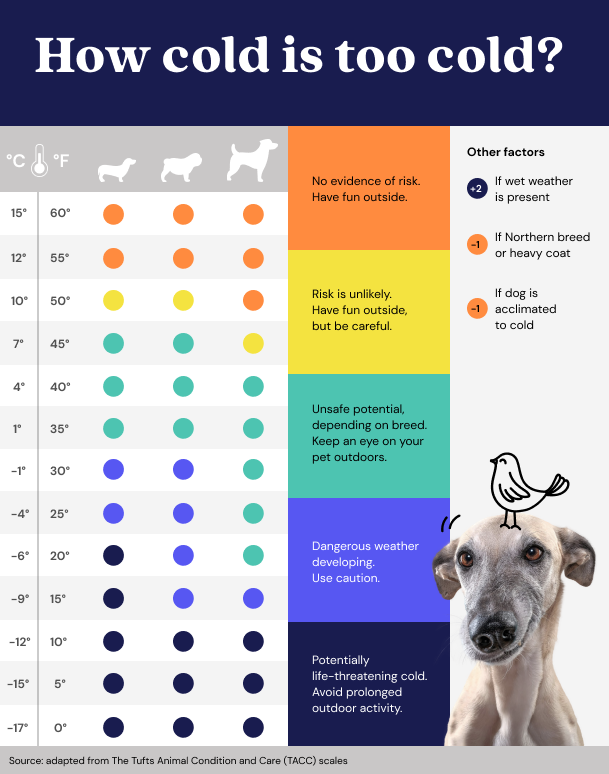
Wondering how cold is too cold for your dog? The Tufts University cold-weather safety scale (below) is a helpful general guide.
A little extra care goes a long way. Bringing pets indoors when possible and speaking up when you see an animal in danger can save lives. Thank you for continuing to advocate for pets in our community.